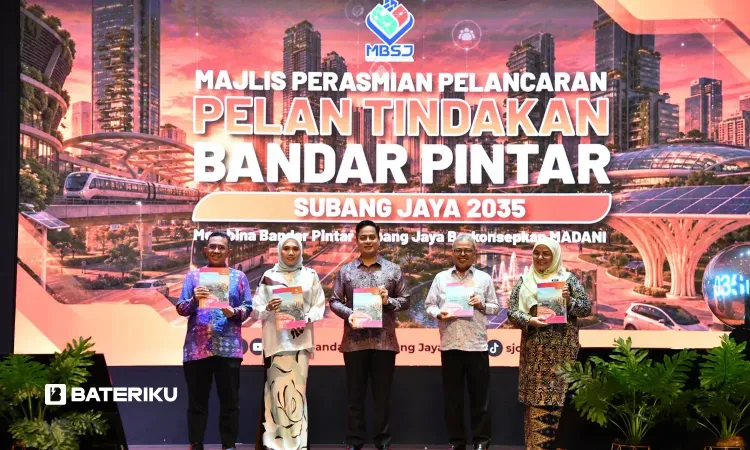
SHAH ALAM, 27 August 2026 - Bateriku participated in the official launch of the Subang Jaya Smart City Action Plan 2035, an initiative aimed at strengthening digital transformation, innovation and data-driven urban management for a more sustainable, inclusive and liveable Subang Jaya.
The launch was officiated by YB Tuan Dr. Mohammad Fahmi bin Ngah, Selangor State Executive Councillor for Islamic Affairs and Innovation Culture, together with YBhg. Dato’ Haji Rumaizi bin Baharin @ Md Daud, Mayor of Subang Jaya City Council (MBSJ).

Bateriku Joins the Launch of Subang Jaya Smart City Action Plan 2035
The action plan places a strong emphasis on leveraging technology, data and innovation to improve the efficiency of urban management and public service delivery, ultimately contributing towards the well-being and quality of life of residents.
For Bateriku, the event represents an important opportunity to explore how private-sector solutions can complement the smart city agenda, particularly in areas involving mobility, road safety and accessible roadside assistance.
From Digital Parking to a Comprehensive Smart City Vision
The smart city initiative in Selangor has its roots in efforts that began in 2016, initially focusing on practical digitalisation initiatives such as moving away from physical parking tickets and coupon books.
What started as a solution to simplify everyday municipal services has since evolved into a broader vision for a smart city ecosystem that benefits residents not only in Subang Jaya, but also contributes to Selangor's wider digital transformation agenda.
The Subang Jaya Smart City Action Plan 2035 reflects this evolution by taking a more comprehensive approach to how technology and innovation can be integrated into the city's future development.
Under the theme “MBSJ Gemilang Bersama”, the initiative highlights the importance of collaboration between local authorities, businesses, communities and other stakeholders in building a city that is ready to respond to future challenges.
Bateriku's Role in Building Smarter and Safer Cities
As a member of the Malaysia Smart Cities Alliance Association (MSCA), Bateriku continues to explore opportunities to work alongside local authorities (PBTs) across Malaysia in supporting smarter urban mobility.
With a nationwide network of 270+ Pitstops, Bateriku is positioned to provide roadside assistance support across cities and communities throughout the country. One area of opportunity is the integration of roadside assistance into existing PBT digital platforms and mobile applications through API integration.
Such integration could allow residents who encounter vehicle breakdowns or roadside emergencies to request assistance directly through the digital services they already use. The concept is simple: when help is needed on the road, assistance should be just a click away.
By connecting roadside assistance with smart city platforms, local authorities can potentially extend the scope of their digital ecosystems beyond municipal services and into everyday mobility and road safety. This also reflects Bateriku's broader commitment to going “Beyond Batteries”, expanding its role within Malaysia's automotive ecosystem while helping Malaysians stay safe and mobile wherever they are.
Collaboration Is Key to Building Smarter Cities
One of the highlights of the launch was the Smart City Forum titled “Memacu Transformasi Digital – Membina Bandar Pintar Subang Jaya Mampan dan Inklusif”, which brought together representatives from government, local authorities and urban planning stakeholders. The forum featured YB Tuan Dr. Mohammad Fahmi bin Ngah, YBhg. Dato’ Haji Rumaizi bin Baharin @ Md Daud, Dato’ TPR GS. Rozita binti Hamit, Deputy Director General of the Department of Town and Country Planning (PLANMalaysia), and Tuan Fauzan bin Rosli, Chief Whip of MBSJ Councillors.
The discussion highlighted an important principle behind successful smart city development: there is no one-size-fits-all solution.
Every city has different characteristics, challenges, infrastructure and community needs. As a result, smart city solutions need to be developed through meaningful engagement between corporates, local authorities and residents.
For businesses, this means understanding the needs of each community before introducing technology or services. For local authorities, it means identifying solutions that can improve public services while delivering meaningful value to residents.
And for residents, smart city transformation should ultimately translate into services that are more accessible, efficient, responsive and relevant to everyday life.
This collaborative approach creates opportunities for public-private partnerships that can deliver mutually beneficial outcomes while supporting the long-term development of Malaysian cities.
Supporting Malaysia's Smart City Future
The launch of the Subang Jaya Smart City Action Plan 2035 demonstrates how the role of technology in urban development continues to expand. Smart cities are no longer defined solely by digital infrastructure. They are increasingly about how data, technology, businesses and communities work together to solve real-world challenges.
From municipal services and urban planning to mobility and roadside safety, these interconnected services can contribute towards creating cities that are more sustainable, inclusive, resilient and liveable. For Bateriku, being part of this conversation reinforces its commitment to supporting Malaysia's evolving smart city ecosystem.
With its nationwide roadside assistance network and growing collaboration with local authorities, Bateriku sees an opportunity to bring automotive assistance closer to communities through technology and strategic partnerships. As Malaysia moves towards a more connected urban future, Bateriku remains committed to its “Beyond Batteries” philosophy, helping Malaysians keep moving safely and reliably, while contributing to the development of smarter and more connected cities.
From batteries to roadside assistance, and from individual motorists to entire communities, Bateriku continues to look beyond the breakdown to build a safer, smarter mobility ecosystem for Malaysia.